Central Heating Radiators

Central heating radiators have gone through a transformation in current years to keep pace with consumer demands to have a practical, yet beautiful home. First and foremost, the heating and efficiency of radiators has improved and the new designs do not interfere with the ability for them to heat well.  Second, a consumer has many choices to choose from and decide on a radiator that will lend to the overall ambience and match the decor of their house.

Find Local Heating & Cooling Pros. Get Up to 4 Quotes Now. It’s Quick, Free, and Easy!

Gone are the days of old, heavy, cast iron traditional radiators, although many buyers still enjoy the classic look and feel of cast iron. A buyer can now choose from stylish and modern radiators such as a chrome radiator or others made of aluminum or stainless steel. These modern choices are lighter weight and easier to install. No longer just a heating unit, radiators can add decoration and ambience to the room and are also easy to take care of and keep clean because of the non-corrosive materials.

Central heating radiators come in the classic rectangle shape as well as in curved, straight, tube, column or hoop units. They can be mounted either horizontally or vertically. Colors range across the spectrum as well, making it fun and exciting to choose one that can compliment a room’s color scheme. Even with odd shaped, small, or wide open floor designs, there are many radiators that can add to the overall design while efficiently heating them.

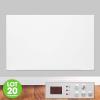
Check out this Great Deal at Wickes as part of their RED PENCIL PRICES campaign. A 600 x 400 universal radiator for less than £15! Now that is what I call a bargain! Click HERE! to check out this deal and many more at Wickes.

central heating radiatorsThe best central heating radiators include the column-type design because their design promotes even heat distribution. Vertical radiators come in many designs and are not limited to the classic look of the old cast iron Victorian radiators as one could assume. The new designs do not take away from efficient heating and are a welcome choice for many buyers. Even if a column design is not a first choice, most other designs will heat efficiently and have even heat distribution.

An oil filled radiator is also a great alternative to a centrally heated radiator as they are highly efficient, portable and safe whilst being economic for the purse strings.

Finding the cheapest central heating radiators does not mean that a buyer is compromising quality. Quality radiators are going to span the whole spectrum of cost. This is because a buyer is often paying more when they choose a more complex and extravagant design based on style rather than just. Cost is also going to be effected by size and BTUs. The bigger the unit the more it is going to cost, while smaller units most likely will cost less.

Quality central heating radiators are usually serviced by a central heating boiler that runs off either electricity, oil or gas.  Even though each central heating radiator can be adjusted separately, depending on the room it is in, the boiler is also controlled by a thermostat.  This part of your central heating system can often be the particularly costly so it is always a good idea to check out some digital programmable thermostats reviews before you decide to buy.

Central heating radiators and their new designs have given interior decorating a whole new dimension. A room can get a whole new look with an upgraded radiator that may just do the trick in heating more efficiently while adding a touch of elegant sophistication.

Central Heating As A Part Of Our Lives

The concept of central heating dates back to the rudimentary hypocaust system of ancient Rome that used hot air and flue gases travelling upward through wall cavities to provide heat for an inside space. However, it has not been until the last century or so that technological advances have added efficiencies and more availability to the mix.

Central heating systems for home use have evolved dramatically. At one time coal burning furnaces heated water either to circulate through a number of connected radiators to bring warmth to rooms remote from the furnace location, or to create steam to accomplish the same purpose. Then as natural gas pipe lines were built, natural gas displaced coal as fuel. In some cases, oil replaced coal. Natural gas and oil are still used as fuels for home heating systems.

Electric Central Heating Systems

Electric central heating has not been used nearly as much as natural gas, although that may change. The need for well insulated, energy efficient housing started gaining greater recognition after the oil shortages of the early 1970′s. For quite some time after that, use of electricity to heat a home was limited by its high operating cost because using electricity required using an electric resistance furnace in a forced air system. Such a furnace blows air across a thick, glowing wire, to create warm air. It is quite inefficient. However, new technology using electricity more efficiently is constantly coming to market, making electricity a very efficient alternative to natural gas.

Central Heating Installation

Central heating installation takes place at the construction site but planning begins with the architect and engineer. A system distributes heat. It does this by means of duct work in a forced air system, or pipes in a hot water or steam system. The duct work is connected to a furnace while the pipes attach to a boiler. A gas furnace has a burner with numerous flames of burning gas that heat the air as it passes over and through them in a forced air system, while in a hot water or steam system, fuel is burned to heat water, which passes through pipes to a radiator, or it creates steam to do the same thing. Duct work is typically run through interior wall cavities to strategically placed outlets. Pipes for a system using a boiler also are easy to conceal and lead to a radiator, or to radiant tubes concealed in a sub floor, to warm indoor living spaces.

Central heating boilers available now are smaller than previous models and use fuel–gas or oil–more efficiently. Central heating radiators for use with such boilers may be the vertical, iron style that has been in use over a hundred years, or they may be a copper tube with closely space, thin metal fins attached to distribute heat. The latter style intrudes less into a room space, weighs less and is easier to handle than a traditional style radiator.

Gas Central Heating

Gas central heating, particularly a forced air system, is the most widespread system in the United States. A forced air system circulates air through a vertical furnace. The air is heated by the burner and passes through duct work to the various rooms of the house. Forced air furnaces that can achieve 96% efficiency by rapidly cycling off and on are available for this type system. A gas fired central heating system may also use a boiler to create hot water or steam which moves through a system of radiators to heat rooms.

Newer building techniques that take advantage of the sun as a source of heat are being used more often on a wider front than ever before. The economic and environmental advantages of this approach are numerous. However, despite increasingly higher levels of thermal efficiency in building and new technologies to make use of sunlight for heating, it is quite likely that there will always be a need for a central heating system in public and private buildings.

Keep Your Furnace Working For Many Years With Routine Filter Maintenance

If you decided to make frequent use of a furnace in your home, or are preparing to do so throughout the winter season, in that case swapping out your central heating air filter will have to, (and really should be), made a component of your routine  home maintenance. Despite a large number of people’s worries, updating furnace filters is practically an effortless activity. Often, it’s simply our own laziness that stops us from acting on it, as opposed to the difficulty of the actual task.

On top of that, if you decide to put money into reusable heater filter instead of the use-and-throw sort, your job is going to be much easier because they don’t need to be exchanged nearly as frequently.

A lot of the heating and cooling equipment manufacturers recommend that the furnace filter get replaced month to month, which might be a good idea. Some great benefits of replacing the filter are elevated efficiency of one’s furnace which usually equals cheaper bills and much less deterioration of your current heater. For anybody who is uncertain how frequently your filter ought to be swapped, check your furnace operating guide book. Upon having established the regularity at which you have to swap your heater air filter, inform yourself around the actions that need to be taken. Here’s a broad outline of the procedure that you must abide by:

  1. Track down the blower door and open it. Based upon your type of central heater, you may have to raise it up then away, swing it clear or perhaps slip it out. Look into the handbook in the instance of difficulty. Several designs include the door at the top of the actual blower.
  2. Locate the actual furnace furnace filter and glide out of its position. Be sure you recall how the filter went in so you won’t have difficulty placing it back again in the same manner.
  3. If the filter is coated with a dense coating of grime, or you aren’t able to see through it, its likely not recycleable. This is the hint to switch the particular filter.
  4. You in all likelihood possess a fiberglass throw-away filter that will need replacing. Search for the dimensions along with model number of the heater filter. Next, throw out the previous filter and purchase a replacement. Central heater filter can be found at area hardware as well as home improvement stores.

Additional information on home heating and cooling can be found at the HVAC Tucson website or for more information on radiators check out central heating radiators.

Next Page »